





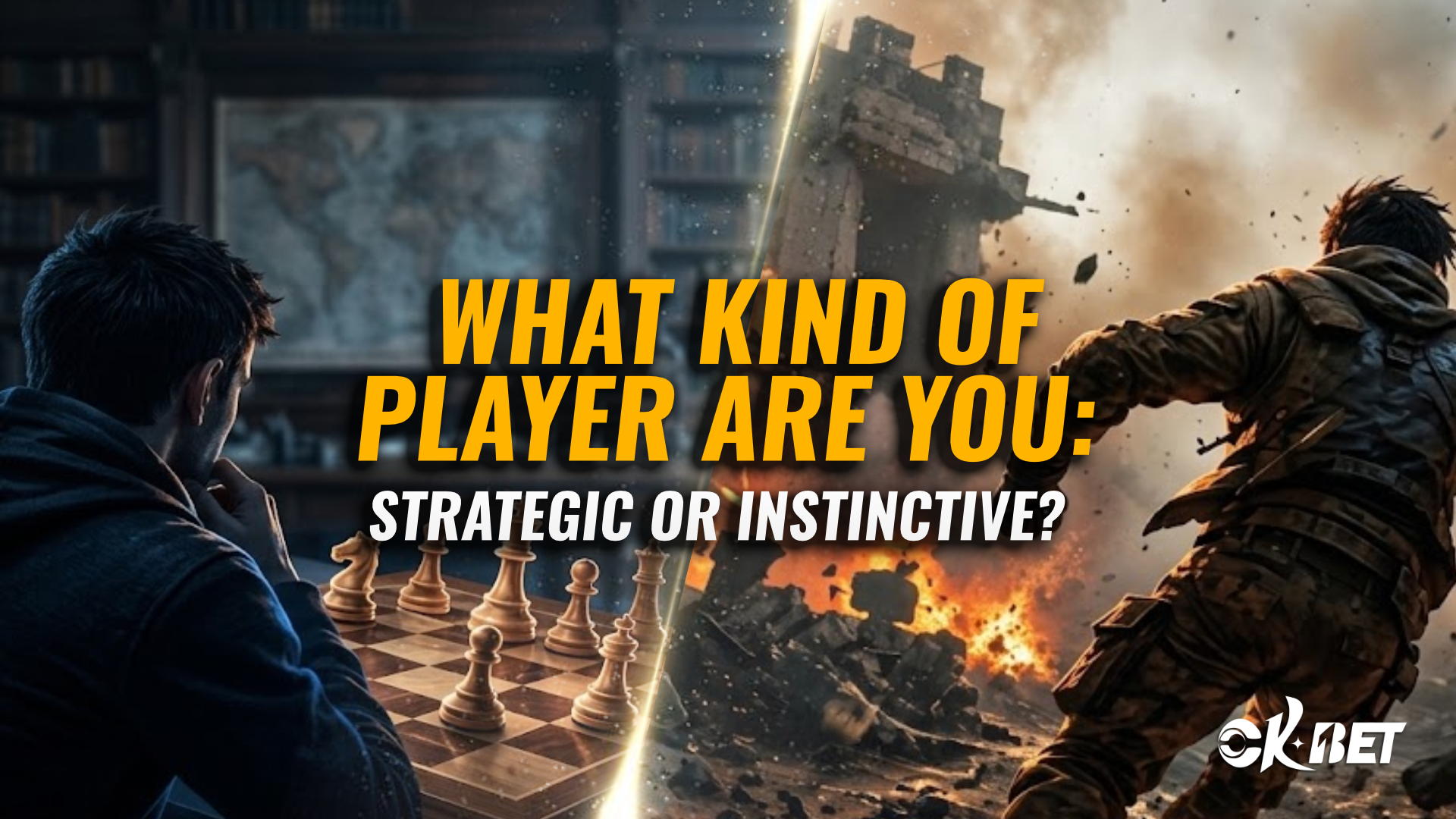
Observe two people who are playing the same game and you will see two very different ways to play. One person takes some time, thinks about all the choices and plans several moves. The other reacts rapidly, acts instinctively and adapts accordingly. It’s not wrong to do it. These two styles are seen in almost every game, whether it’s an action game where the motors are cranked up to 11 or a strategy game that relies entirely on plotting and planning. The real question, not the superiority question, being what is best is which one?
Two Entirely Different Methods of Playing
Each player brings an innate personality to a game, which is often unconscious. Some utilize a reason, and planning. Others depend on reaction and timing. Both strategies are effective but have very different thinking approaches, and it may be the difference that can make all the difference in how you enjoy games.
The Qualities of a Strategic Player
Before taking action, strategic players typically take their time. They have broad horizons, consider possible outcomes, and act on long term gains instead of immediate wants. This type of thinking often leads to fewer errors because players consider additional information when making decisions.
Generally speaking, strategic players prefer to wait for the ideal opportunity rather than acting hastily. They are willing to sacrifice speed for accuracy because a timely decision often outweighs its importance.
Strength in Games That Require a Lot of Planning
The strategy of resource management, positioning, or prolonged decision making is intrinsic to many games. This sort of patient analysis is rewarded in turn-based games, city builders, and other slower-paced activities.
What Qualifies a Player as Instinctive
Reacting Prior to Overanalysing
Instinctive athletes make quick decisions rather than thinking about them. They don’t go through an exhaustive list of situations, but evaluate the situation as it emerges and respond immediately. This strategy works well in a game where it is more costly for someone to hesitate than to make a wrong guess.
Comfort in the Confidence
Instinctive players find it easy to execute without additional information, while strategic players like to obtain that information before they execute. Rather than trying to foresee all of the outcomes, they adapt when things shift.
Proficiency in Quick-Paced Games
This is usually more effective in a game where speed and adaptability are more important than planning. Intuitive thinking tends to be more appropriate for fast shooters, reaction-based or tasks that need a snap decision.
Why Your Mind Interprets These Styles Differently
Greater Initial Mental Processing for Strategic Thinking
Planning ahead means having multiple ideas at the forefront of the mind, and that’s a fair amount of mental processing before you make your decision. That’s one of the reasons why strategic players often like to play in a more relaxed, calm environment.
Pattern Recognition is Required for Instinctive Thinking
Instinctive gamers frequently rely on patterns they’ve learned through experience and repetition rather than deliberately considering their options. They don’t have to go through every action since their brain recognizes a circumstance and reacts nearly instinctively.
Different Styles Are Not Always Better
Strategy Is Thoughtful
It does not mean that methodical behavior means that there is no decision. Strategic players simply take the time to consider their options carefully before making a decision. Their strength is planning for the long haul and sticking to it, not speed.
Instinctive Play is Useful
Accurately doesn’t mean recklessly. Many instinct players have simply become precise and natural with their reactions, even when they don’t really think about them.
Reasons Why Some Game Styles Are Superior to Others
The Art of Game Design for Future Strategy
Resources, patience, and location-based accuracy are skills that are rewarded in games, and strategic players are the ones most likely to excel in these types of games. These experiences allow players ample time to consider their options without penalizing them for taking their time.
Games Designed with Speed and Flexibility in Mind
Instinctive players are more likely to succeed in fast-paced games where there is minimal opportunity for hesitancy. In these scenarios overanalysis can hurt as well, since quick decisions often translate to more expensive transactions than late ones.
Is a Player Able to Be Both?
In fact, most players do a mix of the two.
Very few players are completely classified under one category. Many instinctive players nevertheless plan ahead during slower portions of a game, and many strategic players still rely on instinct during abrupt, unexpected times. The two styles are not mutually exclusive, but often work together.
Context is a Big Deal for Style
Depending on the situation, a single game can elicit multiple approaches from the same player. An unexpected meeting might provoke a prompt, natural response, but a brief period of silence could help to foster strategic thinking.
How Understanding Your Style Can Enhance Your Experience
Quick Decisions Can Be Trusted by Strategic Players
Strategic players can get more at ease in circumstances that don’t give them much time to reflect by practicing quicker, smaller judgements. It only provides flexibility when speed is an issue, but not a substitute for careful planning.
Slowing Down Occasionally Can Help Instinctive Players
Instinctual players may also help to avoid unnecessary errors by taking time to make higher judgments in situations where planning is actually more important than acting quickly on the fly.
Using Your Strengths
Knowing whether you are more instinctual or strategic will help you choose the games you love the most. A fast-paced game might be a lot more enjoyable for a fast-thinking person, while a patient game might be more enjoyable for a person that prefers to meticulously plan their moves.
Going Beyond Your Comfort Zone Leads to Growth
Playing games that test your natural style might also help you develop new abilities. A player who is naturally strategic might enjoy an unexpected amount of enjoyment from a slower game, while another player who enjoys a fast paced game could be amazed at the amount of enjoyment that comes from a slower strategic game.
Both Approaches Increase the Interest of Gaming
Strategic or instinctive tendencies reveal more about a person’s innate mental processes than they do about aptitude or competence. Instinctive players are quick and flexible, whereas strategic players are patient and well-prepared. The majority of players actually switch between the two based on the game and the situation, and neither strategy is superior to the other. Understanding one’s own style does not limit the way one plays, but rather informs one as to the reason that certain games are easier to enjoy and others may be slightly more challenging.