





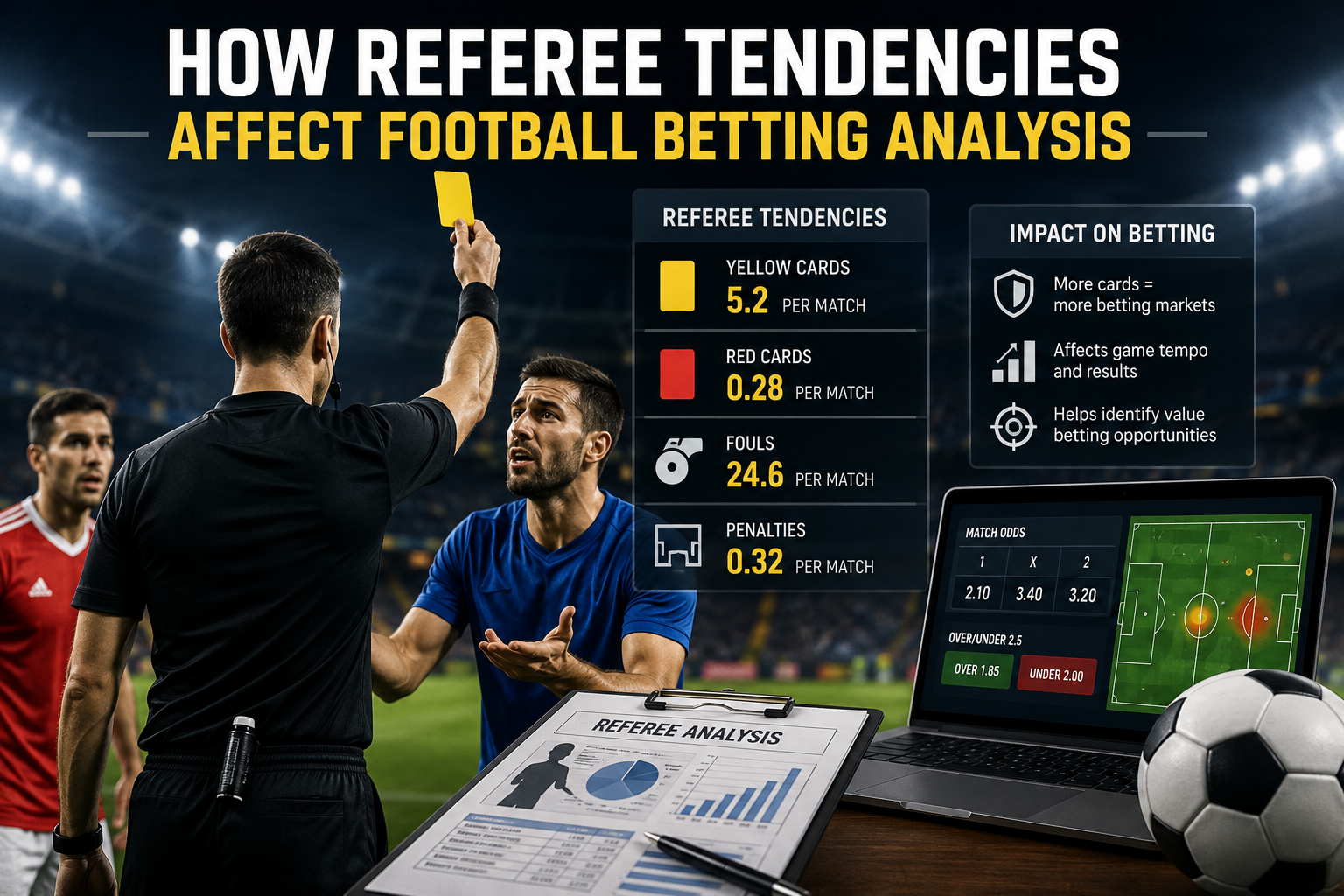
Referee tendencies can add useful context to football betting analysis when the data relates directly to the match and the type of bet being considered. Card averages, foul numbers, and penalty records may reveal recurring patterns, but none should be treated as a prediction by itself. Before applying referee information to a match through a เว็บแทงบอล, the data needs to show a repeated tendency, fit the circumstances of the fixture, and have a clear connection to the betting selection being assessed.
Start With the Referee Data That Matters to the Bet
Referee analysis should begin with the information that relates directly to the bet rather than every statistic available. If the analysis concerns cards, booking frequency and disciplinary decisions are more relevant than unrelated referee numbers. If the focus involves fouls or penalties, the data should be narrowed to those events instead. This filtering prevents a large collection of statistics from creating noise around the question that actually needs to be answered.
The purpose at this stage is not to decide whether the referee favours a particular outcome. It is simply to identify which information deserves further examination. A statistic that has no meaningful connection to the betting context should not gain importance merely because it is easy to find.
Separate Repeated Tendencies From One-Match Events
Relevant data becomes more useful when the same tendency appears across multiple matches rather than coming from one unusual game. A referee who shows several cards in a heated fixture may have been responding to the behaviour of the teams rather than displaying a pattern that should be expected every time.
Looking across a wider sample makes it easier to distinguish recurring tendencies from isolated events. Even when a pattern appears consistently, however, it remains historical evidence rather than a guarantee of the next result. A repeated card average can describe how previous matches developed under that referee, but it cannot establish how many cards the upcoming fixture will produce.
Match Context Can Change How Referee Numbers Should Be Read
Referee numbers do not develop independently from the matches in which they are recorded. Teams create tackles, challenges, confrontations, penalty-area incidents, and other situations that require decisions from the official. As a result, two referees with similar averages may have reached those numbers through very different types of fixtures.
The upcoming match therefore needs to be compared with the conditions behind the historical data. If a referee has regularly produced high card numbers in matches involving frequent physical challenges, that tendency becomes more relevant when the next fixture contains similar characteristics. If the teams generally create different situations, the historical average may deserve less weight. Match context determines how much information the referee numbers actually add.
Connect Referee Tendencies to the Relevant Betting Context
Only after a tendency has shown repetition and relevance to the upcoming fixture should it be connected to betting analysis. The relationship should remain specific to the selection under consideration. A referee with a repeated pattern of issuing more cards may add information to a card-related assessment, but that statistic alone provides little basis for conclusions about total goals or the final match result.
The same principle applies after choosing to สมัครแทงบอล: access to different betting options does not make every available statistic relevant to every selection. Referee data earns analytical value only when there is a defensible path from the historical tendency to the expected match conditions and then to the particular bet being examined. The connection should be established rather than assumed.
Referee Statistics Should Support Rather Than Control the Decision
Referee statistics should support a betting decision rather than determine it on their own. Even when an official shows a repeated tendency for more cards, fouls, or penalties, those numbers describe previous matches rather than guarantee what will happen in the next one. Their relevance still depends on whether the upcoming teams and match conditions are likely to create situations in which that tendency could matter.
For this reason, referee data should be weighed alongside team behaviour, player availability, tactical interaction, and the circumstances of the fixture. A repeated tendency that is relevant to both the match and the bet can strengthen the overall analysis, while a statistic with little connection to either should receive less weight. Treating referee averages as a fixed betting formula would give historical data more predictive power than it actually has.
⚠️ 18+ · Jeu responsable · Les paris comportent des risques de perte